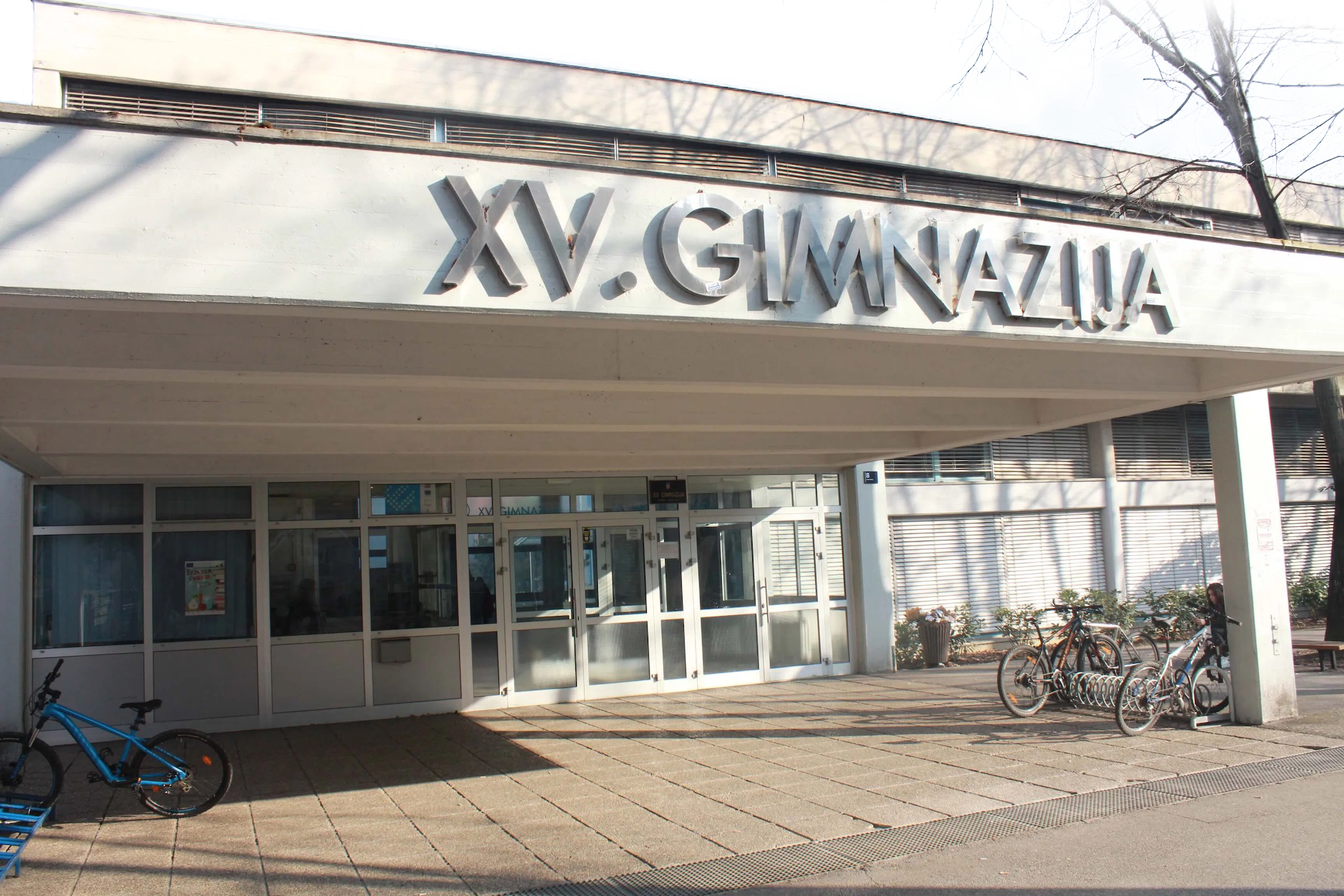
In 2015, after completing elementary school, I was honored to have been accepted to the best high school in Croatia for mathematics and computer science. I owe my enrollment mostly to the national computer science competition that spring where I won 3rd place.
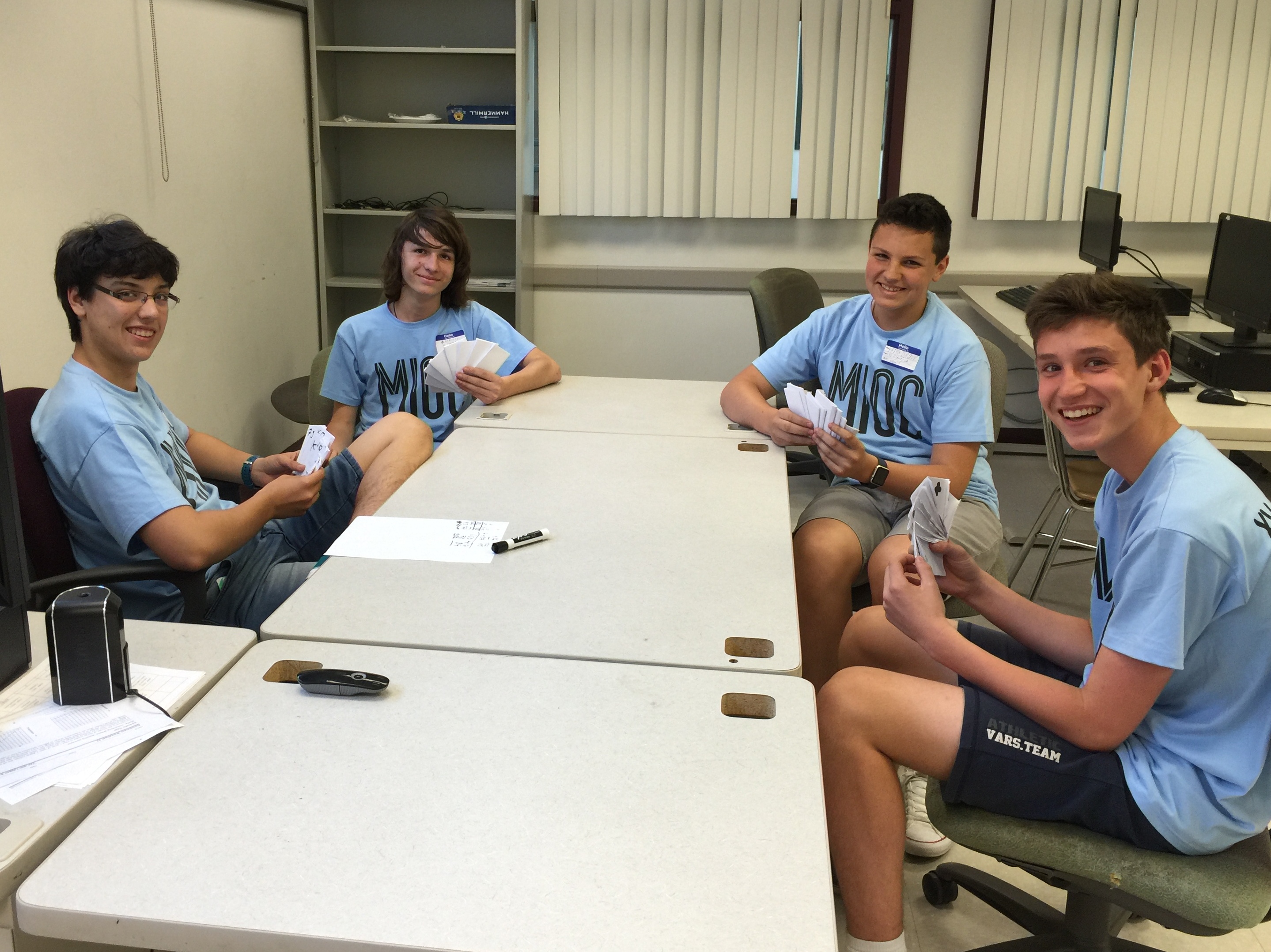
In May 2016, my team from high school and I traveled to Boston, USA for the ACSL 2016 All-Star Contest. The contest was held in Nashua, NH, USA. Even though the competition was fierce with contestants from all around the world, we still had time left over during the competition to play some cards.
The cards are a funny story for themselves. We took the paper from a printer in the classroom, painted on the faces using the markers for the whiteboard, and at the end folded them into usable cards.
ACSL organizes computer science contests and computer programming contests for elementary, junior, and senior high school students. At the 2016 All-Star Contest, which was held in Nashua, NH, USA, my team and I won first place.
Oscar of knowledge is the most significant Croatian award and recognition in education, and it is awarded for the outstanding success and achievements of students at national and international competitions. The award ceremony is organized in cooperation with the Agency for Education, the Ministry of Science and Education, and the Croatian County Council.
The algorithms category of the Croatian national computer science competition challenges students to solve complex problems where their task is to write a piece of code in the C++ programming language which will solve the problem in the most efficient and fastest way possible (the task is to solve a problem while keeping the execution time and memory usage to a minimum).
At the 2019 All-Star Contest, which was held in Wayne, NJ, USA, my team and I won third place.
Since I started elementary school I had gone to extra English classes outside school. In June 2018, I decided to take what was then called Cambridge English: Advanced (CAE) exam. I ended up passing at Grade A with CEFR Level C2.
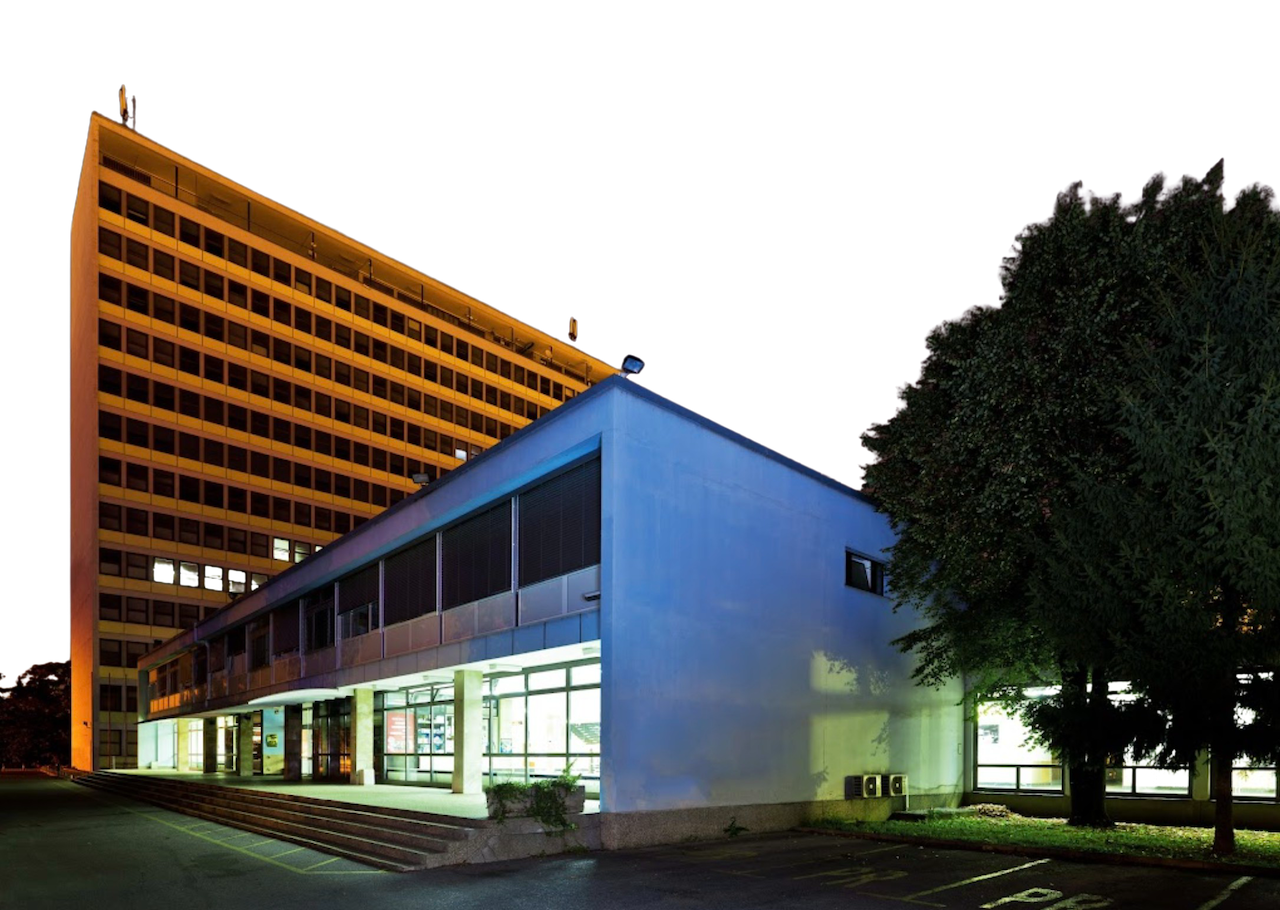
After graduating from MIOC, I enrolled into the most prestigious university in Croatia in 2019. I decided to study Computer Science as it has always been my dream from when I was still in elementary school. Following the first semester, I started thinking what part of Computer Science field I wanted to focus on. Having had some discussions with experienced professionals from the field, I came across the field of Data Science. Let's just say I fell in love with it.
BSc Computing
Weighted GPA
/ 5.0
Top
of students
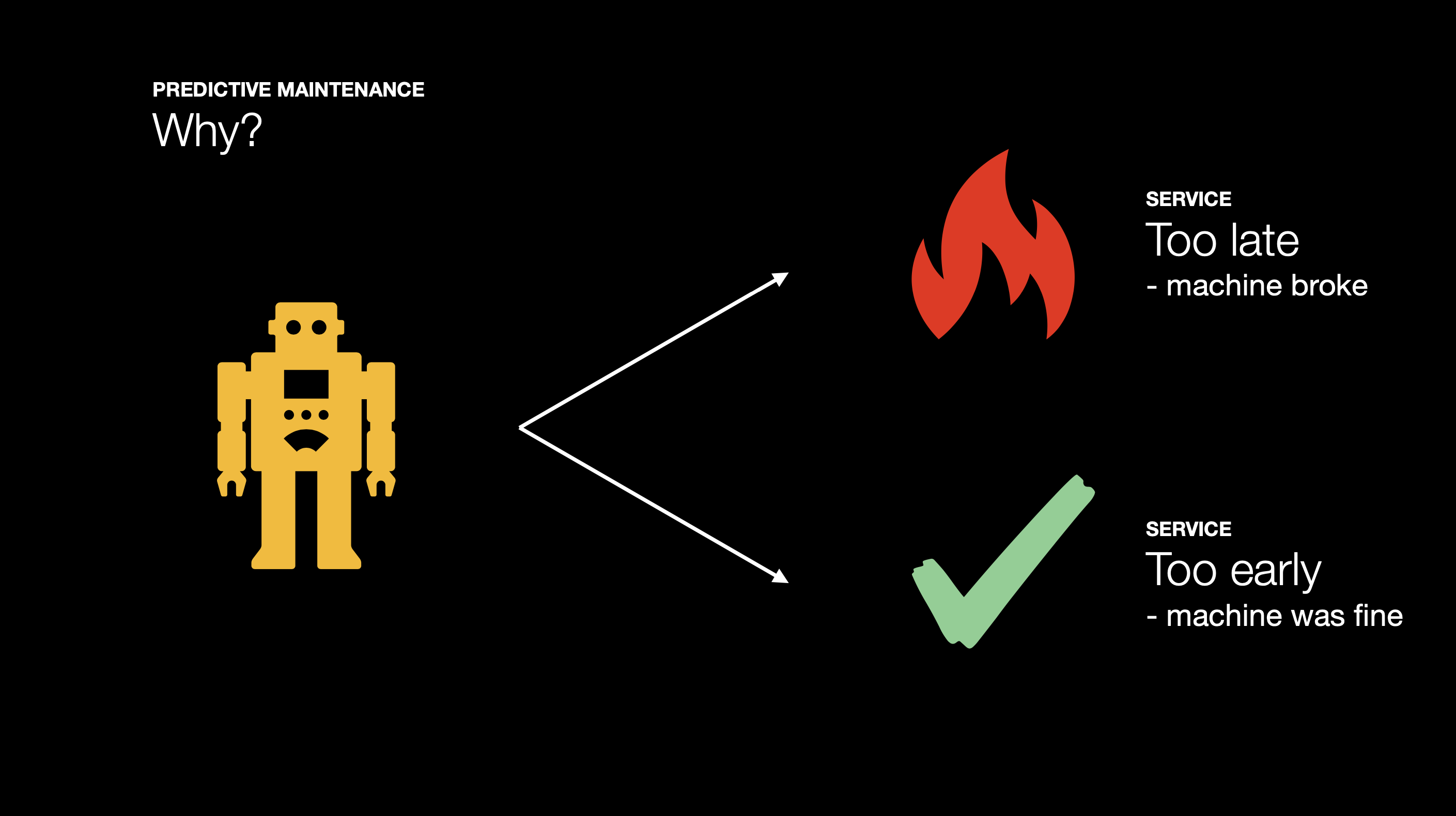
In June 2020, my team and I earned 4th place and the award for best presentation at LUMEN Data Science 2020. The topic of the competition was Predictive Maintenance. Even though we were just getting to know the field of data science, we managed to create a solid solution for the given problem. We were aware of our inexperience which is why we had to do our best to create a good storyline and sell our solution to the panel of judges.
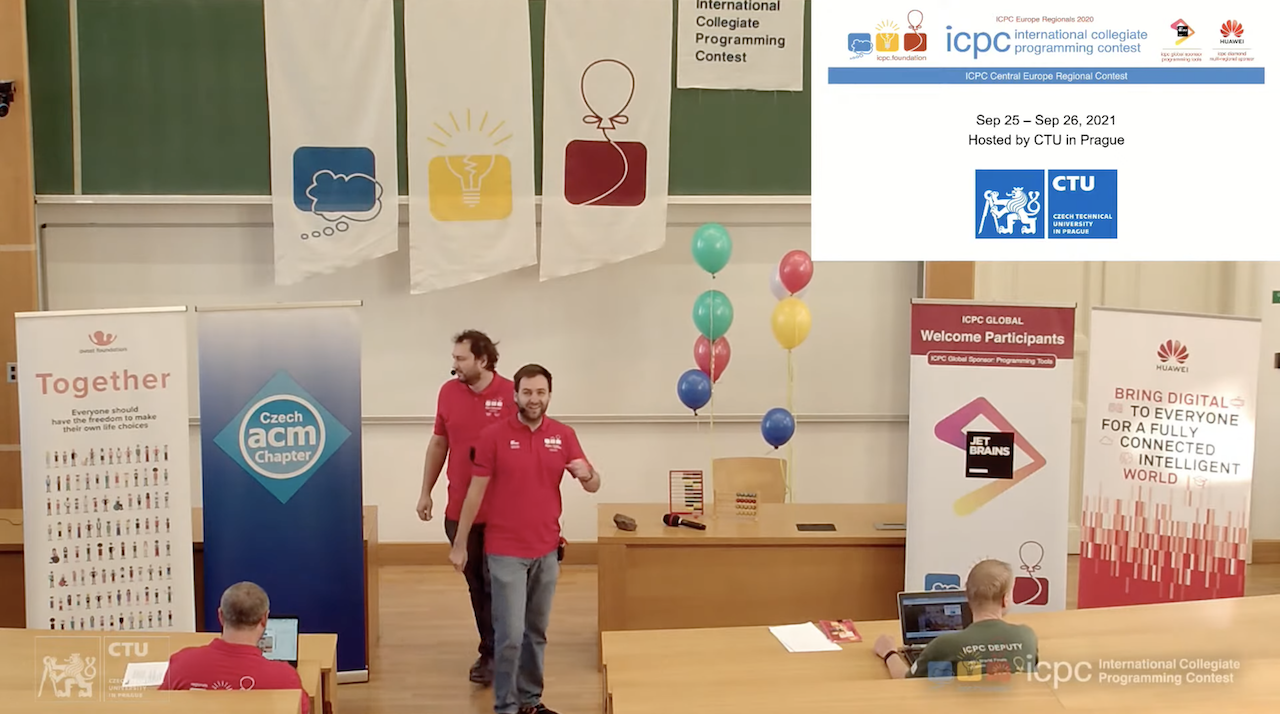
In November 2020, my team and I earned 3rd place at the 2020 Croatian Programming Contest. The podium qualified us for the ICPC Central European Regional Contest (CERC). Due to the ongoing pandemic, the CERC was held online in September 2021. We ended up being 33rd out of 88 teams.
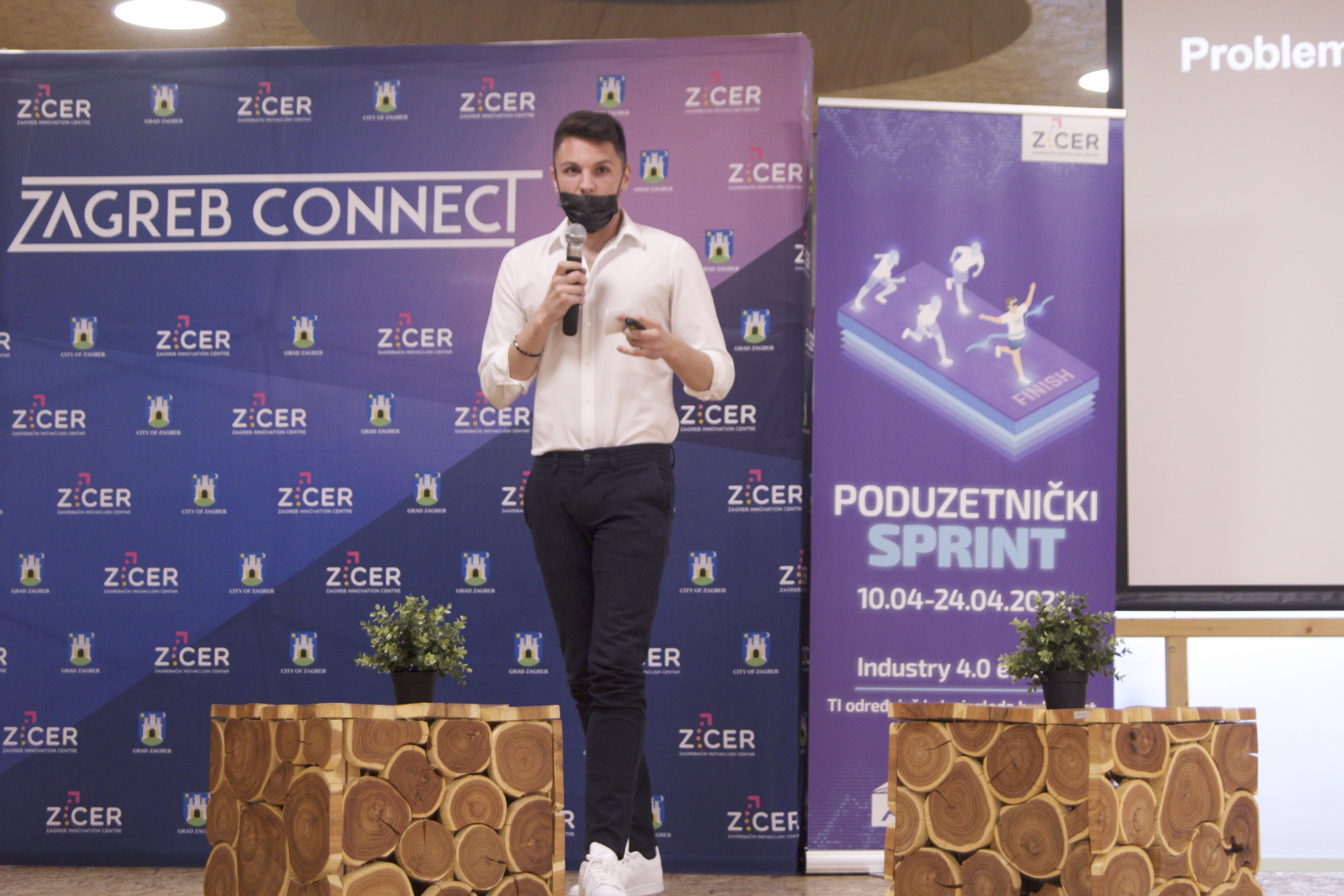
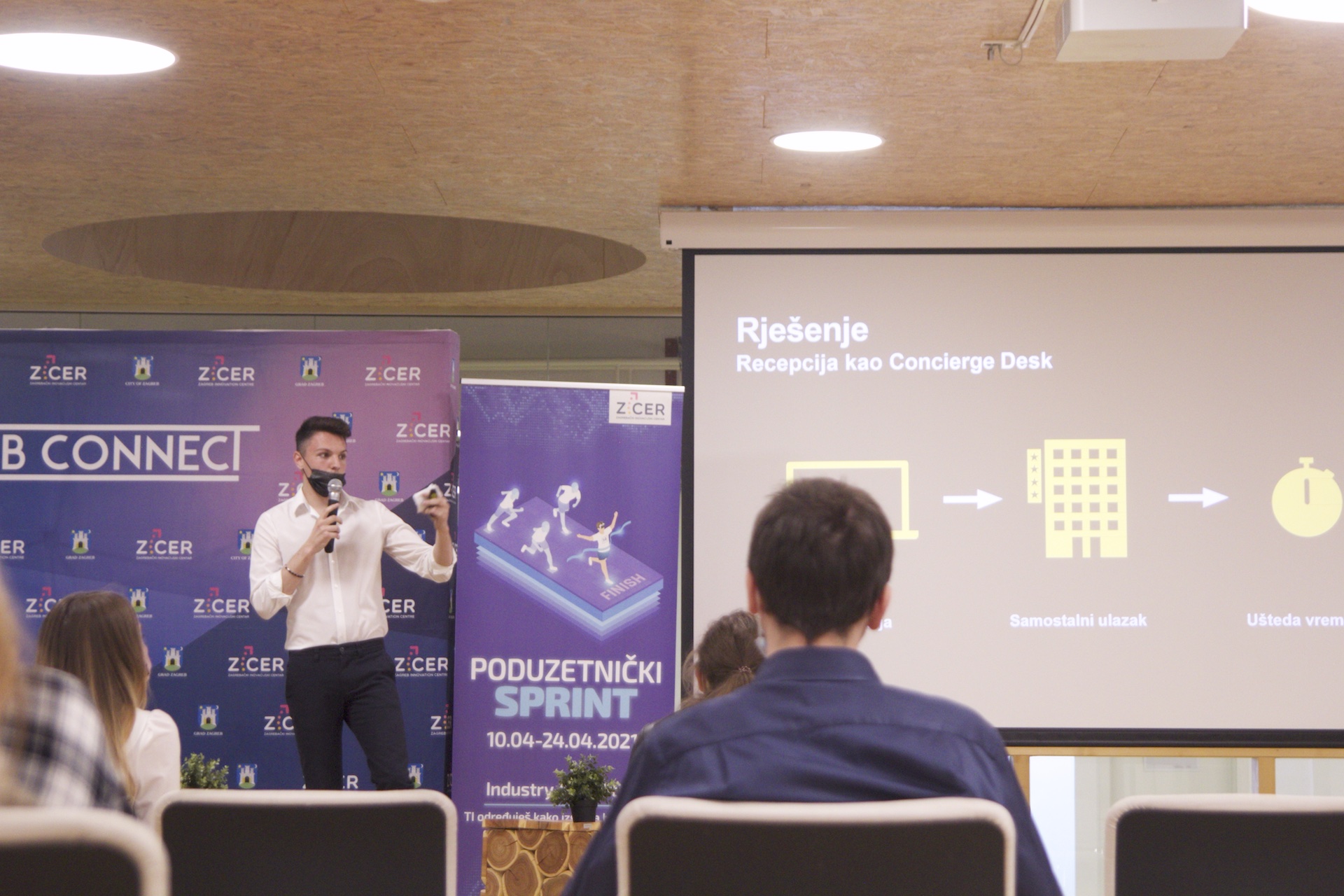
Even though Data Science is my main focus, business is something I have always been in love with as well. That's why when I saw an ad for this competition online, I immediately registered. The competition consisted of various educational workshops where we learned entrepreneurial skills (e.g. presenting, design thinking, etc.). In the end, we had to pitch our idea to a panel of judges among which was Filip Ljubić (Founder & CEO of Q Agency). My team and I developed an idea for a smart knob for the hotel industry which would remove receptions altogether.
When the COVID-19 pandemic hit, I realized that I could either be sitting around watching TV shows or learning and improving myself. The only decision I had to make was where to start.
Data science is an interdisciplinary field that combines domain knowledge with mathematics, statistics, data visualization, and programming skills. The Practical Data Science Specialization brings together these disciplines using purpose-built ML tools in the AWS cloud. It helps you develop the practical skills to effectively deploy your data science projects and overcome challenges at each step of the ML workflow using Amazon SageMaker.
The Business Intelligence & Data Analyst (BIDA)™ program will show you how to use programming and data analytics tools like a finance professional. The BIDA program will teach you how to apply powerful tools such as VBA, Python, Tableau, Power BI, Power Pivot, Power Query, and more to bolster your financial analysis.
This level one certification exam tests a developer's foundational knowledge of integrating machine learning into tools and applications. The certificate program requires an understanding of building TensorFlow models using Computer Vision, Convolutional Neural Networks, Natural Language Processing, and real-world image data and strategies.
The Deep Learning Specialization is a foundational program that will help you understand the capabilities, challenges, and consequences of deep learning and prepare you to participate in the development of leading-edge AI technology. In this Specialization, you will build and train neural network architectures such as Convolutional Neural Networks, Recurrent Neural Networks, LSTMs, Transformers, and learn how to make them better with strategies such as Dropout, BatchNorm, Xavier/He initialization, and more. Get ready to master theoretical concepts and their industry applications using Python and TensorFlow and tackle real-world cases such as speech recognition, music synthesis, chatbots, machine translation, natural language processing, and more.
Machine Learning is the basis for the most exciting careers in data analysis today. You’ll learn the models and methods and apply them to real-world situations ranging from identifying trending news topics, to building recommendation engines, ranking sports teams, and plotting the path of movie zombies. Major perspectives covered include: probabilistic versus non-probabilistic modeling, supervised versus unsupervised learning. Topics include classification and regression, clustering methods, sequential models, matrix factorization, topic modeling, and model selection. Methods include linear and logistic regression, support vector machines, tree classifiers, boosting, maximum likelihood and MAP inference, EM algorithm, hidden Markov models, Kalman filters, k-means, Gaussian mixture models, among others.
In this course, four of Wharton’s top marketing professors will provide an overview of key areas of customer analytics: descriptive analytics, predictive analytics, prescriptive analytics, and their application to real-world business practices including Amazon, Google, and Starbucks to name a few. This course provides an overview of the field of analytics so that you can make informed business decisions. It is an introduction to the theory of customer analytics.
CS50’s Introduction to Artificial Intelligence with Python explores the concepts and algorithms at the foundation of modern artificial intelligence, diving into the ideas that give rise to technologies like game-playing engines, handwriting recognition, and machine translation. Through hands-on projects, students gain exposure to the theory behind graph search algorithms, classification, optimization, reinforcement learning, and other topics in artificial intelligence and machine learning as they incorporate them into their own Python programs.
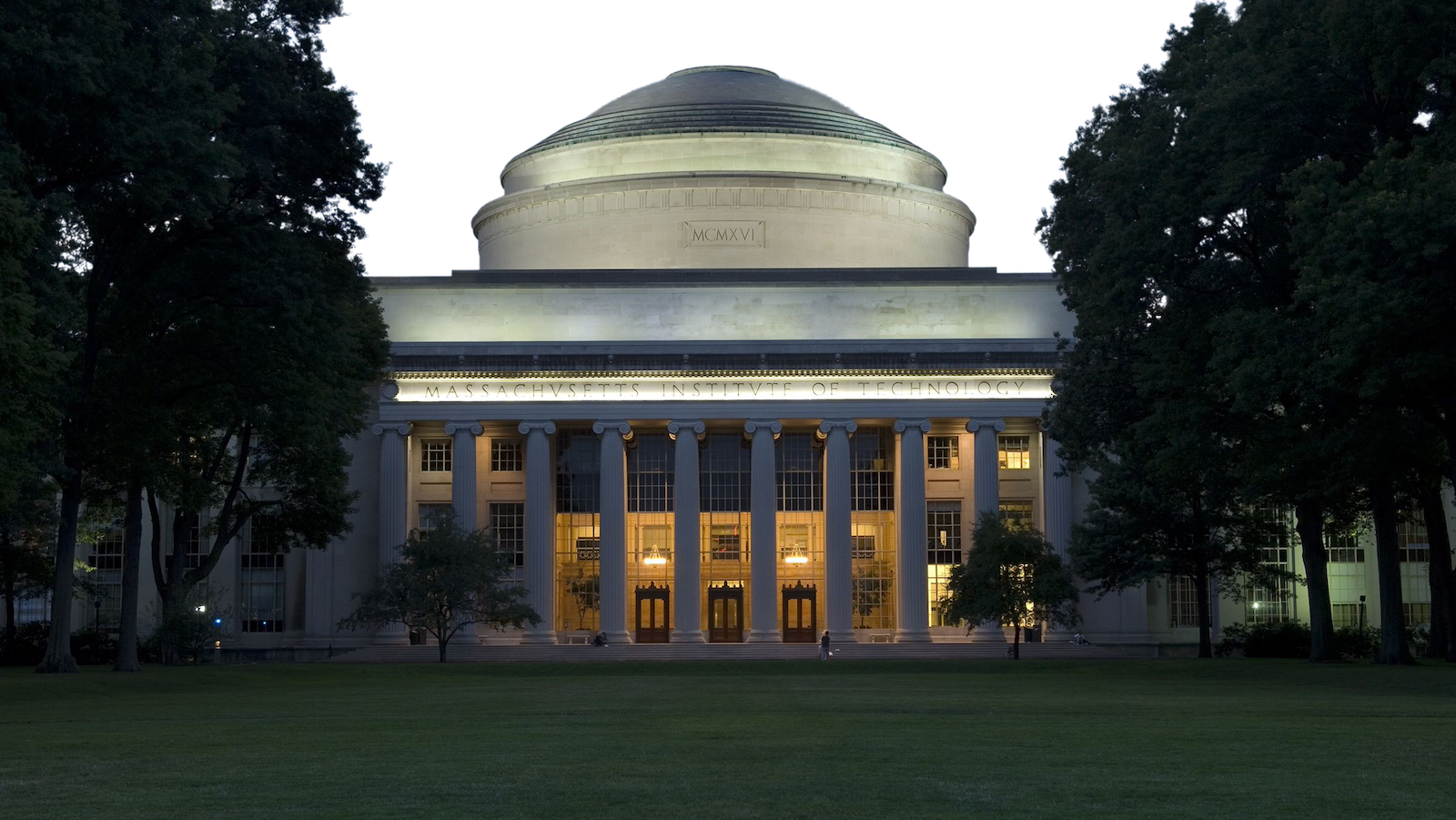
The question of where to start learning Data Science outside my university was not an easy one. Which is why I was delighted when I came across the MicroMasters SDS. All the courses of this program are taught by MIT faculty and administered by Institute for Data, Systems, and Society (IDSS), at a similar pace and level of rigor as an on-campus course at MIT. This program brings MIT’s rigorous, high-quality curricula and hands-on learning approach to learners around the world—at scale.
To complete the SDS MicroMasters program, learners need to take the three core courses and one out of two electives.
Build foundational knowledge of data science with this introduction to probabilistic models, including random processes and the basic elements of statistical inference.
Develop a deep understanding of the principles that underpin statistical inference: estimation, hypothesis testing, and prediction.
Learn the methods for harnessing and analyzing data to answer questions of cultural, social, economic, and policy interest, and then assess that knowledge.
An in-depth introduction to the field of machine learning, from linear models to deep learning and reinforcement learning, through hands-on Python projects.
I was recognized for my achievements in my studies by the CIO, who brought me to the bank to work on various data science projects. Being part of the Analytical CRM for individual customers and Big Data team, I did ETL for multiple projects using Oracle Data Integrator. Designing a data science solution for one problem, I implemented one-shot learning siamese networks (character level LSTM) for binary classification using TensorFlow (in Python alongside Pandas).
Python
SQL
Oracle ODI
Oracle SQL Developer
Microsoft SQL Server
TensorFlow
Pandas
Google API
Microsoft Azure API
I managed
accuracy
By implementing
one-shot learning
siamese network.
In summer of 2021, I took part in the Avaya Internship program. The program lasted for two months. This was a dream come true for me. Not only did I learn a lot about technology, but I also learned so much about how the business behind it all works. The corporate world is something I am keen to learn more about.
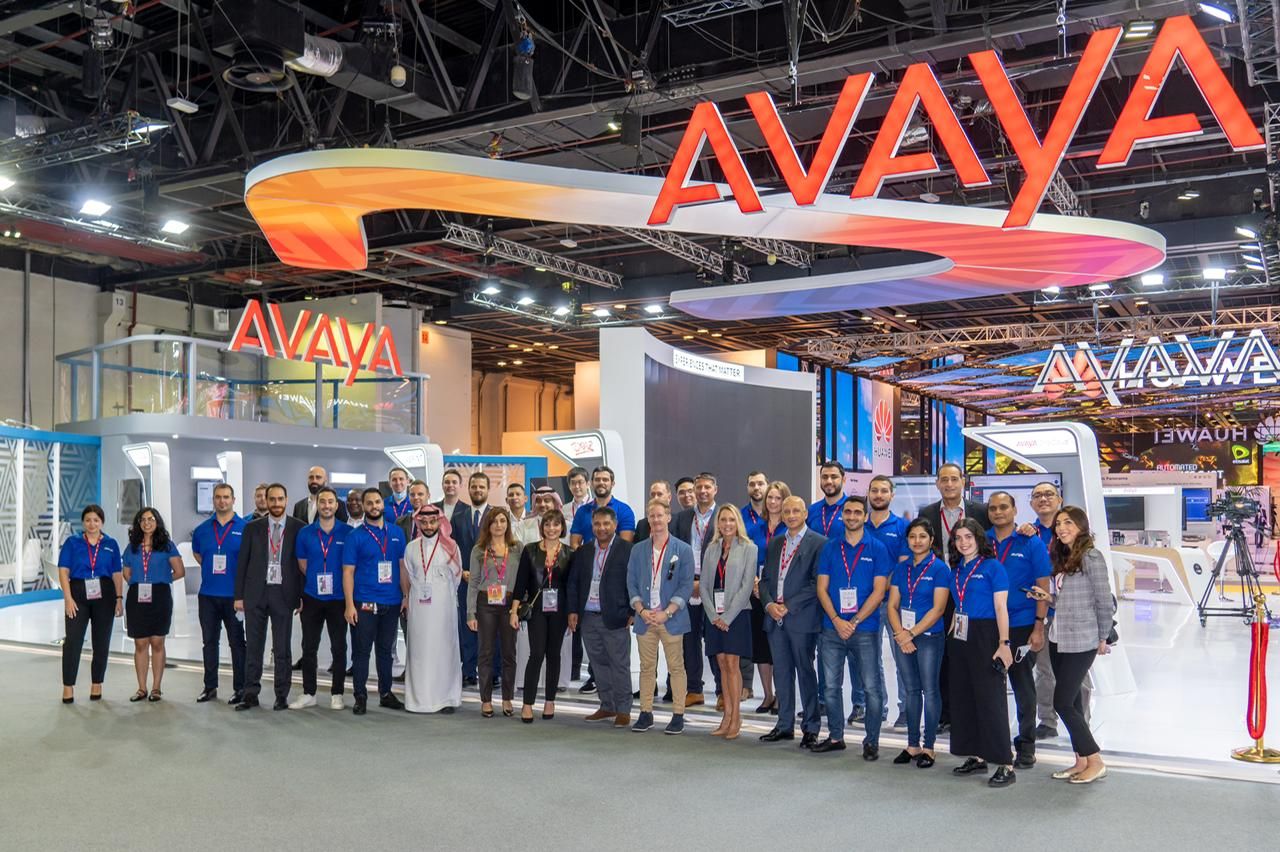
At the start of my internship, I started working on developing a new analytics solution (both backend and frontend). Following a meeting with the Avaya Professional Services leadership team, when I delivered a presentation on “Data Science @ Avaya, Practical Applications & Ideas”, I continued working on multiple projects. Having been impressed by my presentation, I worked with consultants on how they could utilize data science to improve their processes further. Additionally, I created a customer churn PoC model (99.92% AUC) for a contact center with a discount recommendation system which Avaya ended up showcasing at GITEX Global 2021 in Dubai.
Worked on the development of a new analytics solution (backend and frontend)
Created a proprietary secure questionnaire web application (similar to Google Forms)
Created a PoC customer churn model (99.92% AUC) for a contact center with a discount recommendation system
Worked with the consulting team on how they can utilize Data Science to further improve their processes
Held a “Data Science @ Avaya, Practical Applications & Ideas” presentation to the APS leadership team
Dubai
weeks
Total (Dubai + remote)
months
My Customer churn PoC model with integrated discount recommendation model was showcased at GITEX Global 2021 in Dubai as a part of Avaya's portfolio on their stand. People loved the AI demo.
In May of 2021, I was elected to be president of X.FER, a student organization at my university. It's an organization which gathers computer science students who have taken part and have experience in competitive programming. Throughout the years, the main goal of X.FER was to organize a Competitive programming course at the university (a course for students, organized by students). I set my mind to do something more.
Competitive programming course
Open computer science competition - Competitive sunshading
Open computer science competition - TBA
National computer science competition for students - Alumnat
Various lectures from industry professionals at the University of Zagreb
X.FER
members
Competitive programming
students enrolled
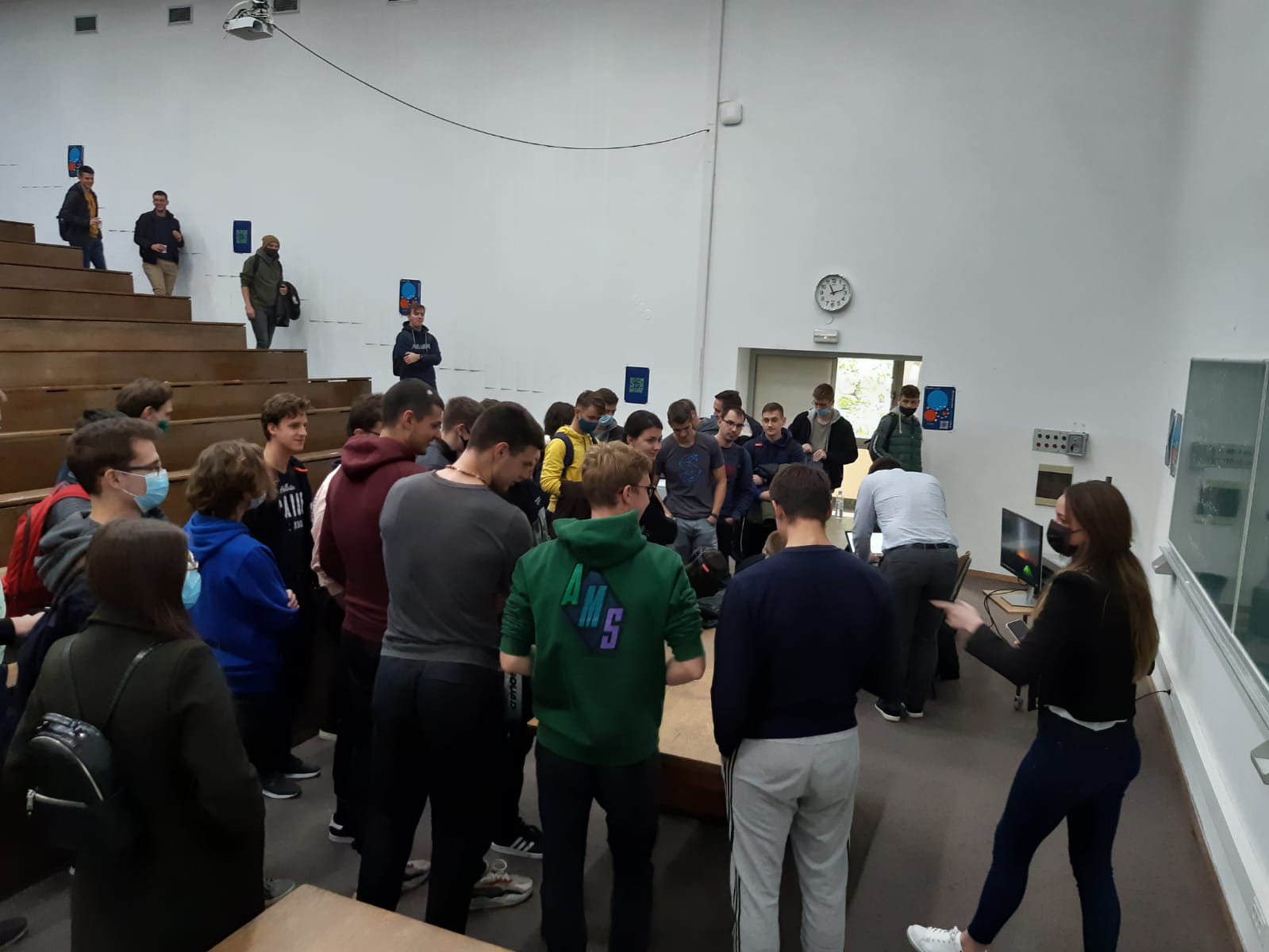
On Saturday, 15th October 2021., we held an introductory lecture for the course. I was amazed by the number of people we have managed to reach. With that, I am delighted to say that we've hit our first milestone with the ~50% YoY increase in enrollment. I am happy to say that I have gathered a successful and motivated team who helped me make all of this happen. I wouldn't be able to do this without them. To help us reward the best students at the course, we've decided to partner with Zagrebačka banka.
*buttons don't work due to Google Translate
When I got back from Dubai, I was offered to join Q in their exploration of the opportunities in the Data Science market.
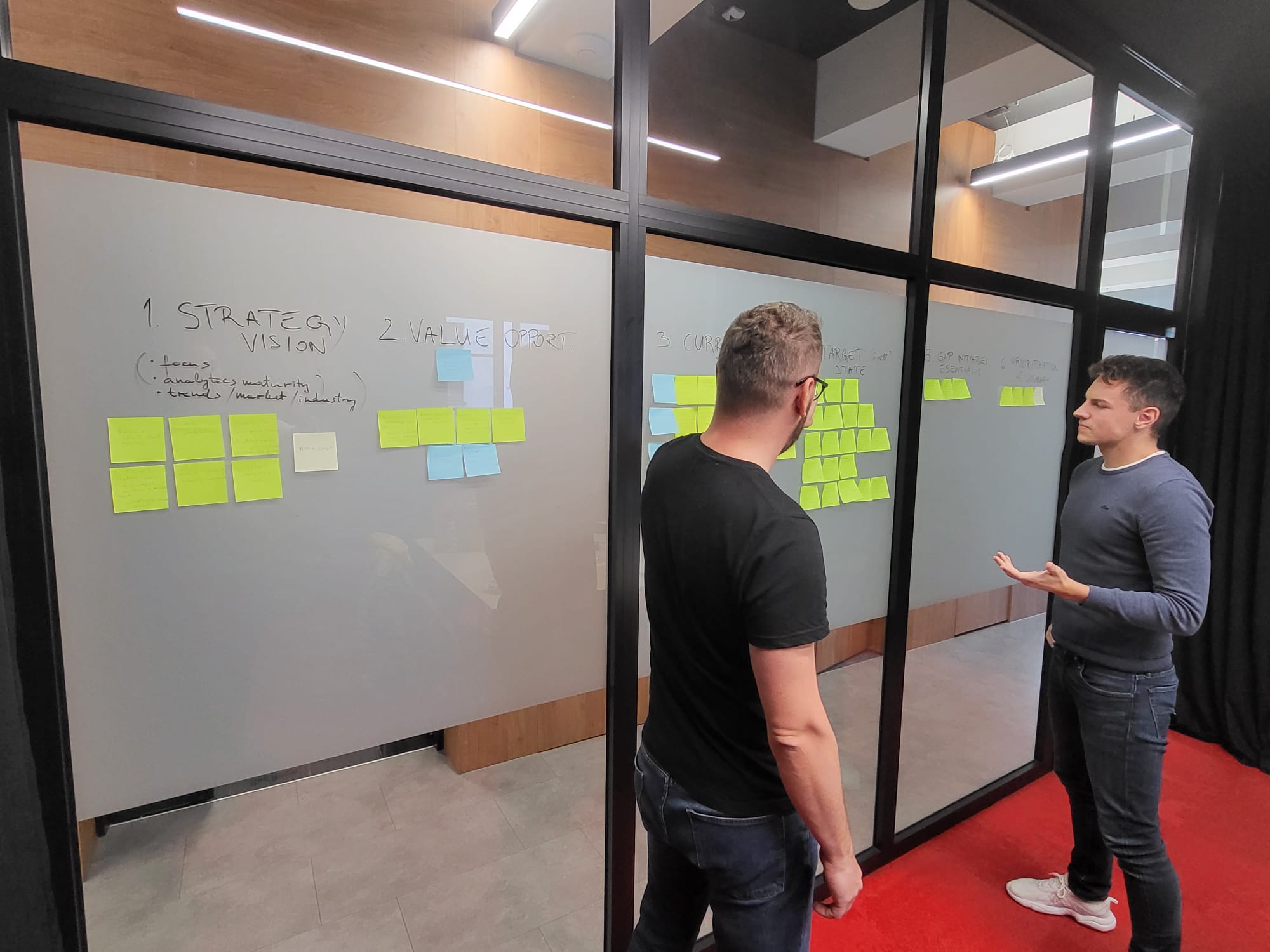
My colleague and I have been developing a consulting methodology centered on data science for the last couple of months. Having a startup mindset, we are developing a new department within the company, negotiating partnerships (Algebra LAB), and acquiring additional consultants while designing sales materials and joining sales calls.
Digital Quest is the methodology designed by Q to guide our clients in capturing specific, digital business opportunities along their value chain. The core of Q’s Digital Quest lies in our Analytic maturity model. A data science roadmap, aligned with strategic goals, is then individually developed based on where your analytics aspiration lies. To reach the full potential of your data and analytics, we guide you through six pillars of digital and analytic change: Strategy, Organization, Process, Talent, Technology, and Data.
My team and I (all three of us students) are designing a predictive model for ATM cash flow. The goal is to test the model in Q3 and Q4 2022, preparing for the deployment on January 1st, 2023, when Croatia plans to switch currencies from Kuna to Euro.